.webp)

See what makes a GOLFTEC Swing Evaluation the best way to start improving your game - with personalized coaching, 3D swing analysis, and a clear plan for long-term success.
Table of Contents:
Hitting golf balls and practicing golf are not necessarily the same thing. You can spend hours hitting hundreds of balls without making meaningful progress if you do not know what you are trying to improve, how to measure your performance or what you need to do differently. Purposeful practice is about having a clear objective, using feedback to understand your performance and developing the skills needed to produce the desired result on demand.
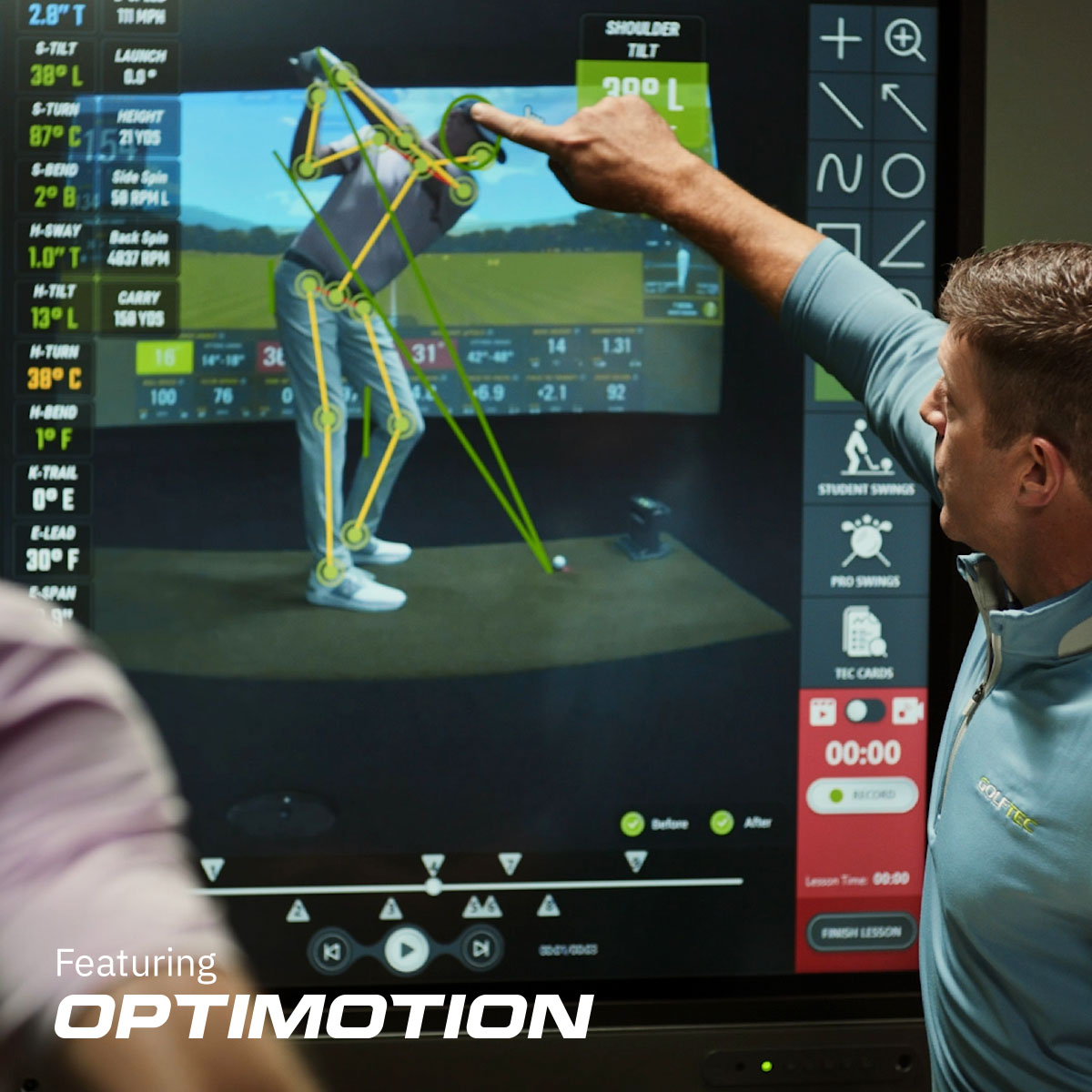
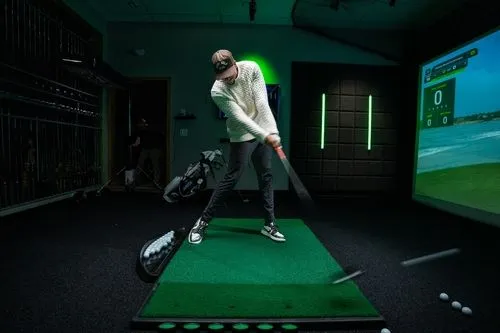
At GOLFTEC Hong Kong, we have a range of technologies that allow us to measure performance and provide immediate feedback. Let us use the example of a golfer who wants to improve their iron contact to demonstrate how we can use these tools to turn a bucket of balls into a purposeful practice session.
Step 1: Define What Good Looks Like
Before we start hitting balls, we need to understand what we are trying to achieve. Solid iron contact involves two key skills. First, we need to strike the ball close to the horizontal centre of the clubface. For most golfers, a strike within 10mm of the centre is a good target, while more advanced players can aim for 5mm. Second, we need to deliver the club with a downward angle of attack, meaning we strike the ball before making contact with the ground. With a short iron, an angle of attack of approximately 3 to 6 degrees downwards is a useful target.
These are measurable skills, which means we can use our technology to establish a baseline, monitor our progress and determine whether our practice is working. Rather than simply judging a shot by where the ball finishes, we can focus on the skills that help produce consistent results.
Step 2: Train Horizontal Contact
Our first objective is to improve where the ball strikes the clubface. The GC Quad provides immediate visual feedback, showing the location of each strike on the face. This gives us objective evidence of whether we are achieving our target, rather than relying on feel alone.
One useful exercise is to create a gate around the ball using alignment sticks. Position the sticks on either side of the ball, leaving just enough room for a centred strike to pass through safely. The challenge is to swing through the gate without making contact with either stick. This encourages the golfer to develop greater awareness of the clubhead's path and strike location.
We can make this exercise even more challenging by placing an alignment stick immediately outside the ball's target line, with no gap between the stick and the ball. The golfer's task is to strike the ball without hitting the stick, deliberately encouraging a toe strike. Reversing the arrangement allows the golfer to practice producing a heel strike instead. Many golfers do not need much practice at this particular 'skill', because they are already very good at it by accident.
Why would we deliberately practice hitting the wrong part of the clubface? Because learning to control a skill often involves exploring its extremes. By intentionally producing toe and heel strikes, we develop a better understanding of the movements and sensations associated with each outcome. This manipulated practice helps us build awareness and control, making it easier to find the centre of the face consistently.
Throughout the exercise, the GC Quad provides the evidence. We can see whether our attempts to change the strike are producing the intended result and gradually narrow our focus towards consistently hitting the centre.
Step 3: Train Low Point and Angle of Attack
Once we have worked on horizontal contact independently, we can shift our attention to the second skill: controlling where the club reaches the bottom of its arc. For a solid iron strike, we want the club to contact the ball before the ground, with the low point of the swing occurring ahead of the ball.
The angle of attack data on our SKYTRAK system gives us an objective measure of how the club is being delivered. We can then use constraint led practice to encourage the desired movement.
For example, place a towel approximately 10cm behind the ball. The challenge is to strike the ball without hitting the towel. This encourages the golfer to avoid contacting the ground too early. Alternatively, place a small impact sticker approximately 10cm beyond the ball and challenge the golfer to strike it after hitting the ball. Both exercises provide a clear external target that encourages the golfer to control the low point of the swing.
Our video technology adds another layer of feedback. By watching the swing back, we can assess whether excessive swaying or early extension during the downswing is making it harder to deliver the club correctly. The video helps us understand the movement behind the numbers, while the SKYTRAK data tells us whether the desired result has been achieved.
Another useful exercise is to exaggerate the movement. Explore the feeling of maximum sway towards the target and try to punch the ball as low as possible. This encourages the hands to move forwards at impact and can help move the low point further ahead of the ball. Check the angle of attack data and see whether you can produce a downward angle in double figures on demand.
The objective is not to make every iron swing look or feel like this exaggerated movement. Instead, we are exploring the boundaries of the skill. Once you understand what too much feels like, it becomes easier to recognise and control the amount of movement you actually need.
Step 4: Combine the Skills Under Pressure
Having worked on each skill independently, it is time to bring them together. We can use the on course feature on our SKYTRAK system to create a challenge that tests both contact and performance under pressure.
Imagine playing the 18th hole at Emirates Golf Club in Dubai. The large water hazard in front of the green makes this an intimidating approach shot. Set the flag near the front of the green and choose a distance five yards shorter than your personal best carry with a 7 iron. For example, if your best carry is 160 yards, set the target at 155 yards. Closer to home, pick an approach you know well, such as a water-guarded par 3 at Kau Sai Chau, and set the same challenge.
The challenge is to hit 10 consecutive shots over the water, which would mean each shot flying within 10 yards of your personal best carry distance. This is a demanding but realistic test. You need to produce enough speed and a suitable launch to clear the hazard, while maintaining the contact and low point control you have been developing.
The competitive element changes the task. It is one thing to hit a good shot when you are concentrating on a single technical skill. It is another to do so when you have a clear target and the pressure of knowing that one poor shot means starting again.
During this exercise, return to the evidence. Check the strike location on the GC Quad and review the angle of attack on SKYTRAK. You can judge the shot by its outcome, but you can also assess whether you achieved the underlying skills that make good contact repeatable.
Make Every Practice Session Count
Purposeful practice does not mean making every session complicated. It means having a clear objective, knowing what success looks like and using feedback to determine whether you are improving.
At GOLFTEC Hong Kong, our technology allows us to measure the skills that matter, practice them independently and then combine them in realistic situations. Whether you are working on iron contact, improving your driver or developing a more consistent short game, the principle remains the same.
Hitting balls is an activity. Purposeful practice is a process. When you know what you are trying to achieve, have a way to measure it and challenge yourself to reproduce it under pressure, every ball has a purpose. That is how we make practice more productive and give you the best opportunity to take your improvements from the bay onto the golf course.
Book a session at GOLFTEC Hong Kong to start practising with purpose, or explore our plans and practice memberships.

Play the best golf of your life. GOLFTEC Coaches use cutting-edge tech and proven methods to level up your game fast.
Book a Lesson
Play Better!