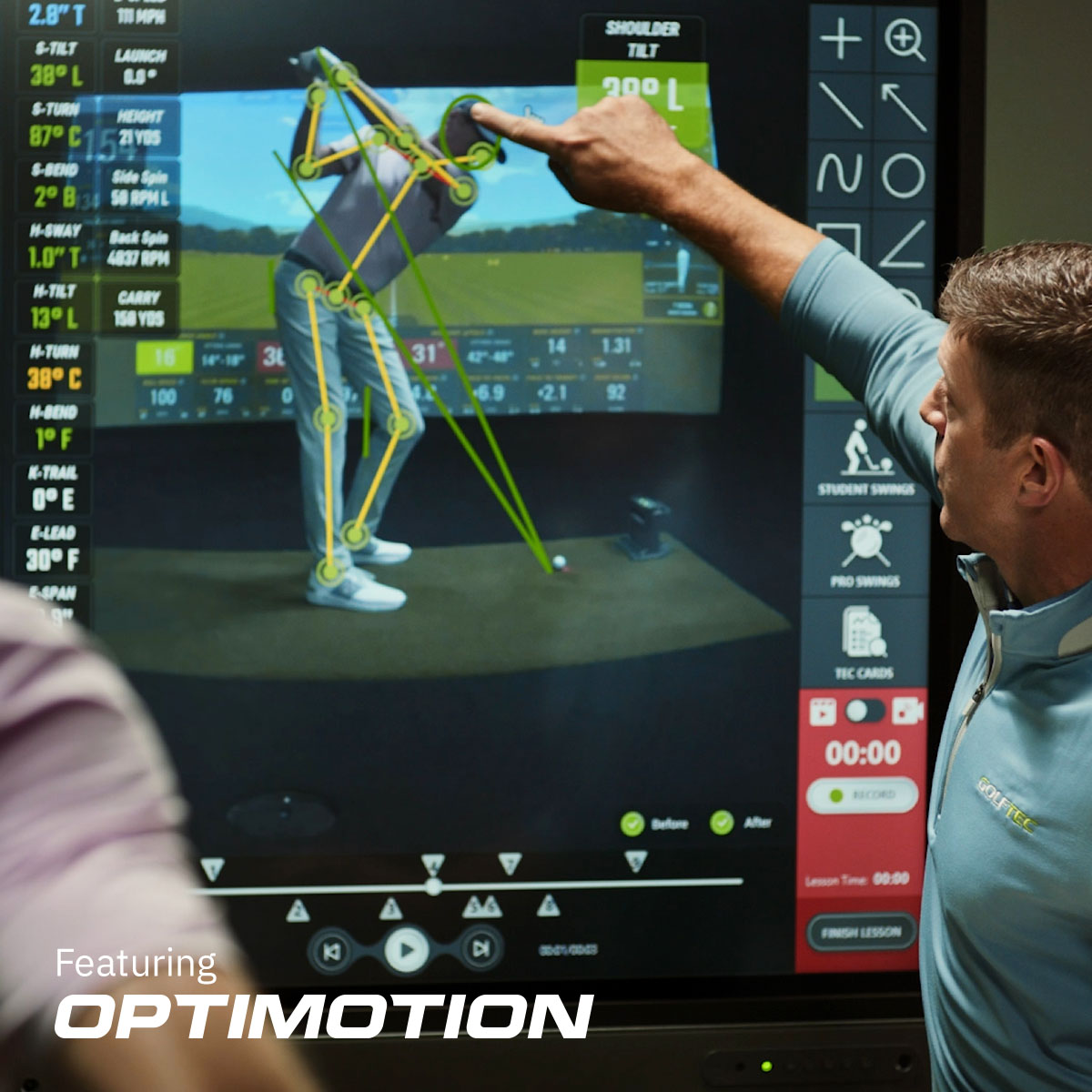

See what makes a GOLFTEC Swing Evaluation the best way to start improving your game - with personalized coaching, 3D swing analysis, and a clear plan for long-term success.
Table of Contents:
If your driver alternates between a solid shot and a weak miss, find out where the ball is meeting the face. A change in strike location can affect flight even when the swings look similar on video. A small sample of marked shots gives you something more concrete to work on than the last ball you hit.
Make a face map
Use removable impact labels made for golf clubs or a launch monitor that records impact location. Hit eight drives at your normal playing speed with the same tee height and ball position. Mark each impact as heel, centre or toe and low, middle or high. Keep the misses in your sample.
Compare the mark with the flight
Write down the starting direction and shape beside each strike. A heel strike on a driver can add fade curvature, while a toe strike can add draw curvature. Face angle and path also affect the result. If the curve appears mainly on off-centre strikes, start by improving contact before drawing conclusions about path.
Retest one small change
Change tee height by one small increment or try a slower rehearsal and then hit eight more at your usual playing speed. Pick one adjustment and keep the other variables steady. Compare how many strikes landed in the middle area of the face. A tighter cluster gives you a clearer baseline to bring to a lesson.
Before your next Hong Kong round, note which strike pattern produces your playable tee shot and use that pattern to choose a conservative target. Explore GOLFTEC Hong Kong.
For more on how the club moves at impact, read Matt Chalmers’s angle of attack guide.

Play the best golf of your life. GOLFTEC Coaches use cutting-edge tech and proven methods to level up your game fast.
Book a Lesson
Play Better!