.webp)

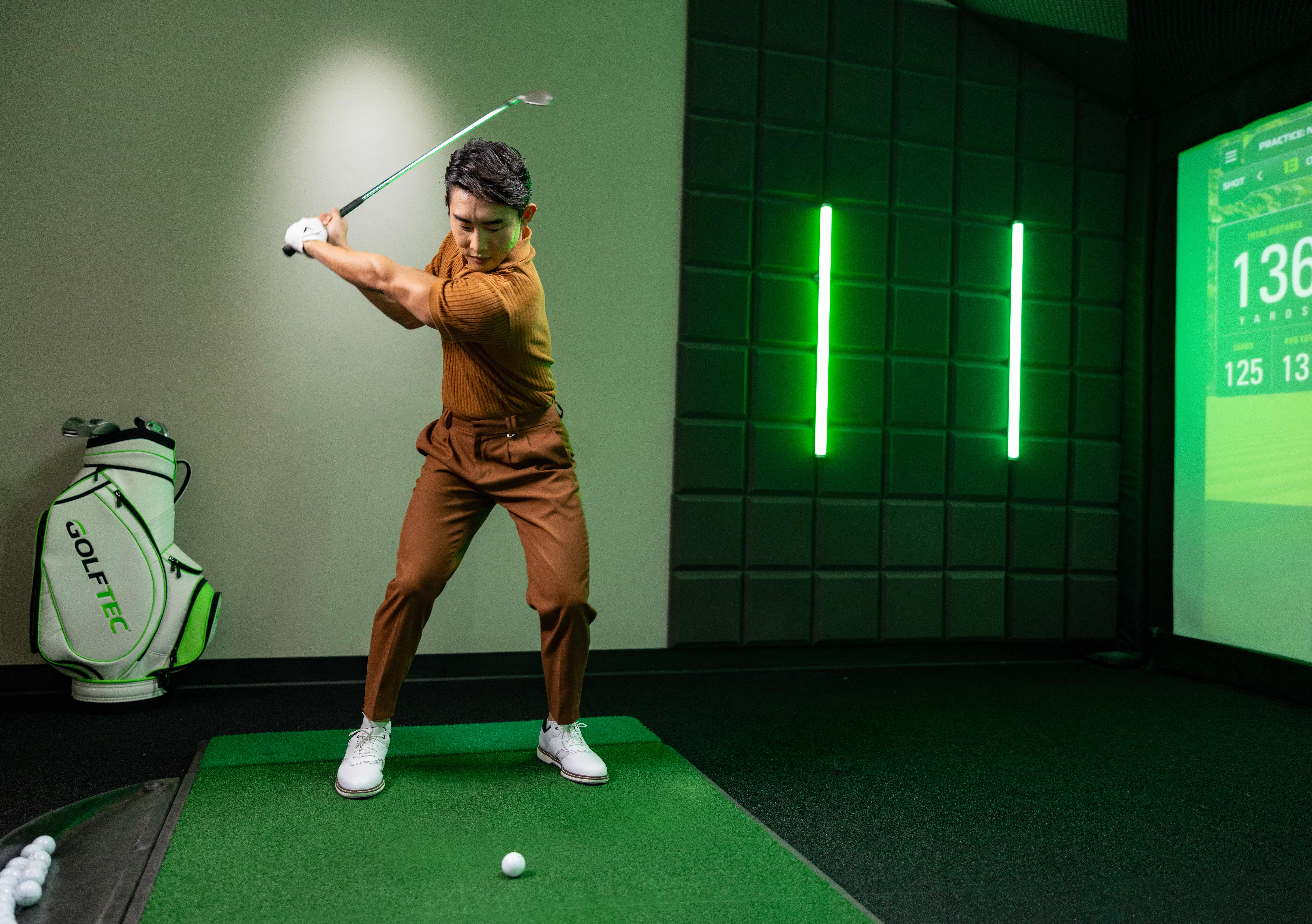

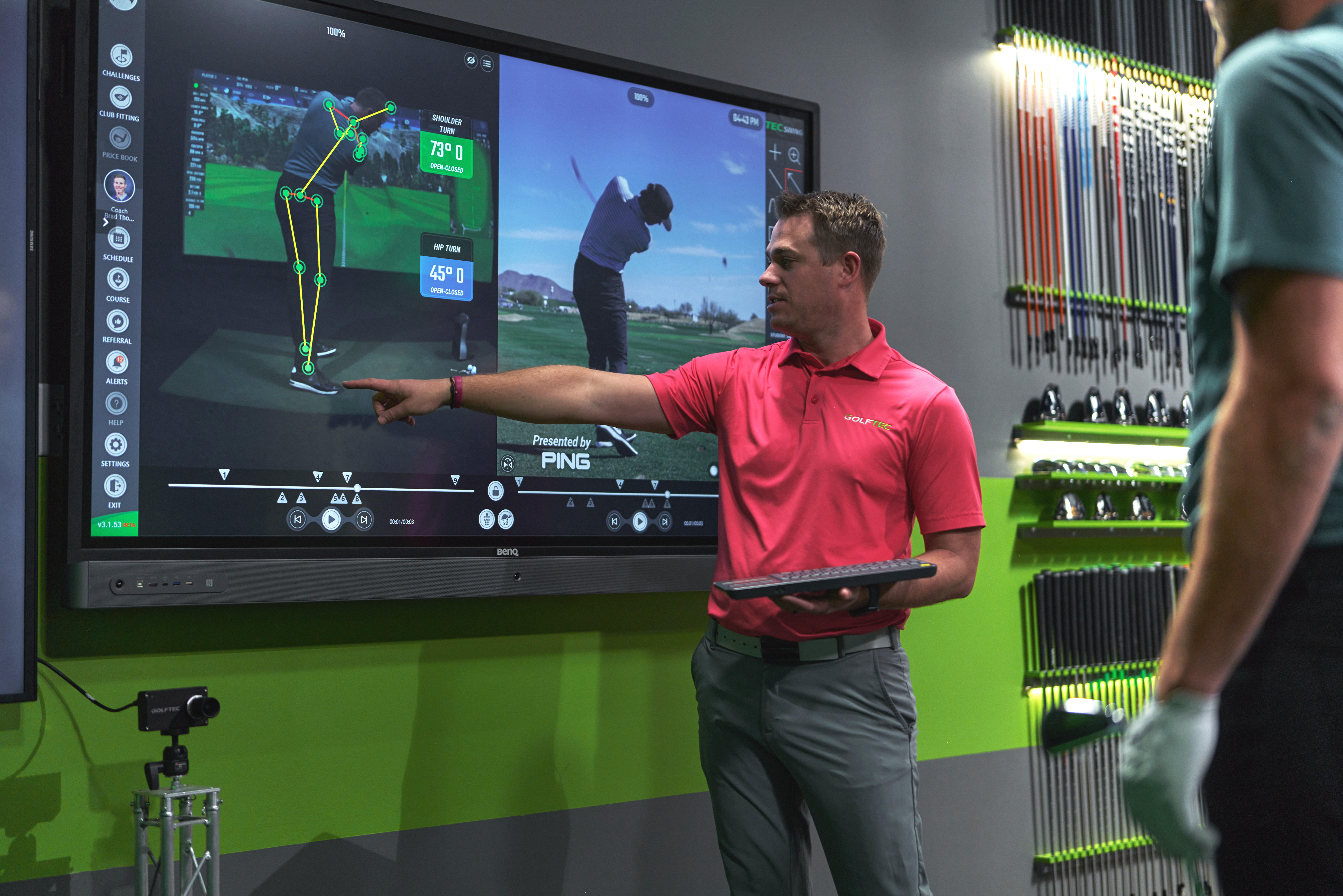
Unlock a more consistent, powerful golf swing using OPTIMOTION at GOLFTEC. Learn how real-time motion data and coach-guided feedback can help you correct flaws, track progress, and swing like the pros.
Table of Contents:
Golf Fitness Hong Kong: How Physical Training Improves Your Swing
Golf looks like a low-intensity sport. You walk a few kilometres, swing a club a hundred times, and spend most of the round standing around. So why does physical fitness matter so much?
Because generating a golf swing correctly requires mobility, stability, and strength in very specific patterns — and most golfers lack at least one of these. The result isn't just lost distance. It's a swing that compensates for physical limitations in ways that create inconsistency, fault patterns that coaching alone can't fully fix, and a higher risk of injury over time.
The Physical Demands of a Golf Swing
A golf swing requires:
- Thoracic spine rotation — rotating your upper back through a full range of motion without compensating from your lower back
- Hip mobility — being able to separate hip and shoulder rotation, the foundation of power generation
- Glute strength — stabilising and driving the lower body through impact
- Core stability — maintaining your spine angle through the swing while your body rotates around it
- Shoulder and wrist mobility — essential for a full, pain-free backswing and follow-through
If any of these physical capacities is limited, your swing compensates automatically. The most common compensation patterns — early extension (standing up through impact), over-the-top (losing the swing plane at the top), and reverse pivot — are frequently rooted in physical restrictions, not just technical misunderstanding.
What Golf Fitness Training Actually Involves
Golf fitness training is not the same as general gym training. Exercises are selected and programmed specifically for the demands of the golf swing. A good golf fitness program focuses on:
- Rotational mobility work — hip openers, thoracic rotations, deep stretches specific to golf movement patterns
- Stability and balance training — single-leg exercises, anti-rotation core work, glute activation
- Speed training — progressive exercises designed to increase rotational speed, which translates directly to clubhead speed and distance
- Injury prevention — targeted work on the lower back, wrists, elbows, and shoulders, which are the most common golf injury sites
How Golf Fitness Connects to Coaching
At GOLFTEC Hong Kong, physical assessment is part of the coaching picture. When a swing fault is identified that has a physical root cause, your coach will flag it and can recommend specific mobility or strength work to address it alongside your swing coaching. Fixing the physical restriction and the technical pattern simultaneously is significantly faster than trying to coach around a body that can't make the movement.
Golfers who combine swing coaching with targeted fitness work consistently outperform those doing one or the other alone. The swing gets more efficient, the physical limitations get addressed, and the two reinforce each other.
Getting Started with Golf Fitness in Hong Kong
You don't need a specialist facility or expensive equipment to start. Many golf fitness fundamentals — hip mobility drills, thoracic rotation stretches, glute activation exercises — can be done at home with minimal equipment. If you want a structured program built around your specific swing profile and physical assessment, start with a GOLFTEC swing evaluation, which will identify the physical areas most relevant to your swing improvement.
Book a Swing Evaluation | See golf lesson packages | Explore all services at GOLFTEC HK
A better body makes a better swing. Start with a Swing Evaluation at GOLFTEC Hong Kong — we'll identify exactly what your swing needs, physically and technically.

Play the best golf of your life. GOLFTEC Coaches use cutting-edge tech and proven methods to level up your game fast.
Book a Lesson
Play Better!